

SaaS Application Development - The 2026 Complete Guide
Building a SaaS product in 2026? DevelopCoins breaks down the key steps, from defining your MVP and choosing an architecture to estimating costs and deciding where AI fits.
SaaS products support everything from workflow automation and customer management to analytics, collaboration, and AI-based services. But a good idea alone is not enough. A successful product requires clear user needs, the right scope, pricing, technology, and a plan for long-term scalability.
SaaS application development brings product planning, UX, architecture, subscriptions, integrations, security, and AI together. Making these decisions early can reduce unnecessary development work and create a clearer path to launch.
Have a SaaS Idea? Start by Answering These 5 Questions
A SaaS product should begin with the business problem rather than the technology.
Define the problem - Determine a problem the product is uniquely qualified to solve. Defining a sharp pain point can provide a solid foundation.
Identify the users - Understand who will use the platform and their goals. B2B users need teams, reporting, and integrations, whereas consumer users need easy on-boarding and personal options.
Define who pays - Subscription, usage-based, premium, and enterprise pricing models affect billing, account management, permissions, and feature access.
Establish the product’s value - The product needs a clear reason for adoption, whether that means saving time, reducing manual work, replacing several tools, or solving a specialized problem.
Define the first version - Don't include the entire roadmap in the first release. A limited MVP offers a useful service, and validates the business model with minimal investment.
What Makes a SaaS Application Worth Paying For in 2026?
A SaaS application needs to provide value beyond the initial signup. The product should become useful enough to fit naturally into the customer’s regular workflow.
Recurring business value - Support activities customers perform repeatedly.
User retention - Give users a practical reason to return regularly.
Automation - Reduce repetitive work through workflows, integrations, and AI-assisted functionality.
Useful AI - Add assistants, AI chatbot development, AI recommendations, analytics, RAG, or AI agents when they solve a genuine need.
Relevant integrations - Connect payment gateways, CRMs, analytics tools, and other APIs.
Pricing is another part of the value equation. Buyers may consider subscription fees alongside usage, AI-related expenses, contract terms, and the business results the platform can deliver. A SaaS product becomes easier to sell when its value is clear.
Decide What You Should Build Before You Start Development
The product model affects scope, cost, architecture, and user experience. These choices should be settled before development begins.
B2B vs B2C SaaS
B2B product would generally need account organization, role-based access, team administration, reporting, and integration. B2C products might focus more on onboarding, personalization, engagement, and individual subscription.
MVP vs Complete Product
An MVP will address the main problem with a manageable set of features. Building out all your planned roadmap can consume budget if it is carried out without validating what is "wasting the money." As customers might not want what you plan to do.
Single-Purpose vs Multi-Module SaaS
A focused SaaS can work well when one problem represents the strongest market opportunity. Multi-module SaaS makes more sense when several connected workflows need to operate within one platform.
Web vs Web and Mobile
A web application may suit office-based workflows, while mobile applications become valuable when users need access remotely or during time-sensitive tasks.
Custom SaaS vs No-Code/Low-Code
Simple concepts or internal work-flows could benefit from using a no-code/low-code platform. When a business needs to have own business logic, or complex integrations, advanced security, or control over platform can choose custom SaaS development.
Your SaaS MVP - What Should You Build First?
The MVP should cover the core user journey rather than every feature on the roadmap.
Core user journey - The main action customers come to complete.
Accounts and roles - Registration, authentication, permissions, and access levels.
Dashboard - A central view of important information and actions.
Subscriptions and payments - Plans, billing cycles, upgrades, invoices, and recurring payments where required.
Admin controls - User, subscription, reporting, and platform management.
Essential integrations - Only the services required for the primary workflow.
The goal is not to make the MVP as small as possible. It should be focused enough to test, measure, and improve before larger investments are made.
How Much Does SaaS Application Development Cost in 2026?
There is no fixed SaaS development cost because every product has different features, complexity, and technical requirements. A basic MVP will require a very different budget from an enterprise SaaS platform with multiple roles, integrations, AI features, and advanced security.
A basic SaaS MVP typically takes around 3 - 5 months, while a mid-level SaaS application may take 5 - 8 months. More complex enterprise SaaS platforms can require 8 - 12+ months, depending on the scope and functionality.
The final cost depends on factors such as product scope, UI/UX, architecture, multi-tenant requirements, third-party integrations, AI capabilities, web or mobile development, security, infrastructure, testing, and post-launch support.
Which SaaS Architecture Fits Your Product?
Architecture should support the product’s current requirements without creating unnecessary limitations as usage grows.
Multi-Tenant or Single-Tenant
Multi-tenant SaaS allows multiple customers to use shared infrastructure while keeping their accounts and data separated. Single-tenant SaaS gives a customer a dedicated environment and may suit enterprise products with stricter isolation requirements.
Database, APIs, and Tech Stack
The database should reflect how users, organizations, subscriptions, transactions, and permissions interact. A SaaS tech stack may include React, Next.js, Node.js, Python, PostgreSQL, or MongoDB.
API Architecture
APIs become important when the platform needs mobile applications or connections with payment providers, CRM systems, analytics tools, communication platforms, and other services.
Security and Compliance
Security should cover authentication, authorization, encryption, backups, monitoring, and secure APIs. Enterprise SaaS may also need audit trails, access controls, and practices aligned with requirements such as SOC 2.
Where Does AI Actually Belong in a SaaS Application?
AI can become a valuable part of SaaS when it removes friction or helps users accomplish something better.
AI Assistants
AI assistants such as Generative AI development can help users find information, generate content, summarize data, answer questions, or navigate complex workflows.
Workflow Automation
AI can handle repetitive processes, classify information, trigger actions, or support decisions based on defined business rules and available data.
Predictive Analytics
Predictive models can identify patterns in business data and help users anticipate demand, customer behavior, operational issues, or other relevant outcomes.
Recommendations
Recommendation systems can personalize content, products, actions, or insights based on user behavior and available information.
RAG
Retrieval-augmented generation can connect AI responses with a SaaS platform's own documents, knowledge base, and business data, making responses more relevant to the application.
AI Agents
An AI agent development can take on multi-step tasks and interact with connected tools or systems. They can be useful when the product involves workflows that require more than a simple question-and-answer interaction
Ready to Build? Let’s Turn Your SaaS Idea Into a Product
A successful SaaS product starts with a clear problem, defined users, a practical MVP, and an architecture that fits the business model. The right development plan can then bring together UI/UX, integrations, AI, development, testing, security, and launch requirements.
If your SaaS idea involves AI, Developcoins, an AI development company, can support the project with services such as AI development, AI agent development, AI chatbot development, blockchain development, crypto wallet development, and Web3 development.
Share your requirements with DevelopCoins and turn your SaaS concept into a practical product plan with the right features, technology, and development approach.

THE AUTHOR
DEVELOPCOINS EDITORIAL TEAM
Our Developcoins' Editorial Team brings over 10+ years of experience in blockchain, fintech, and AI-based technologies. We are a team of developers, analysts, and technical writers sharing insights from successful projects. We believe content should do more than inform. It should guide, clarify, and give readers the confidence to explore new technologies. To support this, we publish content backed by practical knowledge gained from working on live projects across industries.
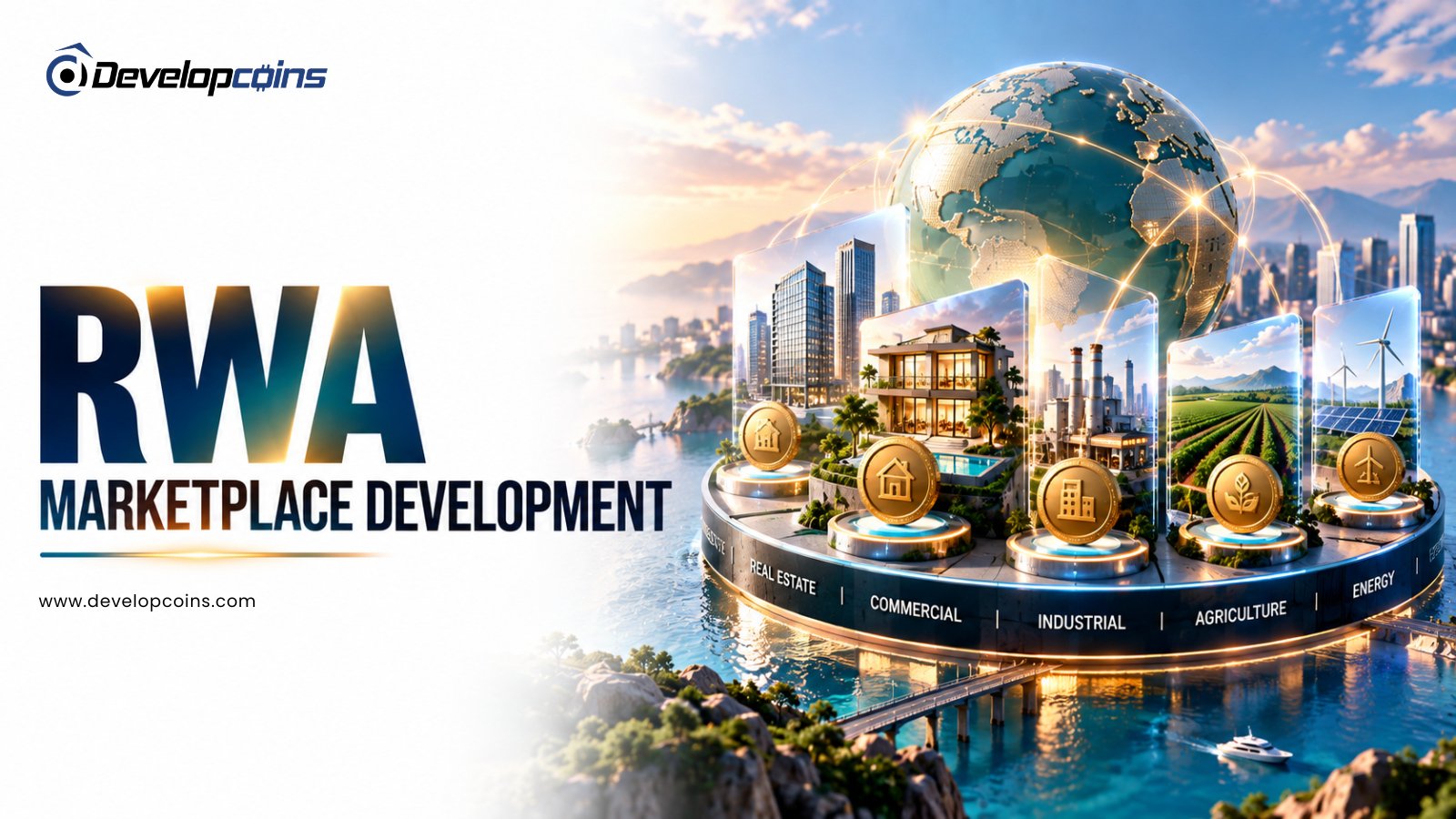 RWA Marketplace Development: Build a Platform for Tokenized Real-World Assets