

How Tokenization Is Changing Fine Wine Investment With Blockchain?
Explore how blockchain and tokenization are changing fine wine investing, from fractional ownership and asset tracking to digital marketplaces, with Developcoins supporting the technology.
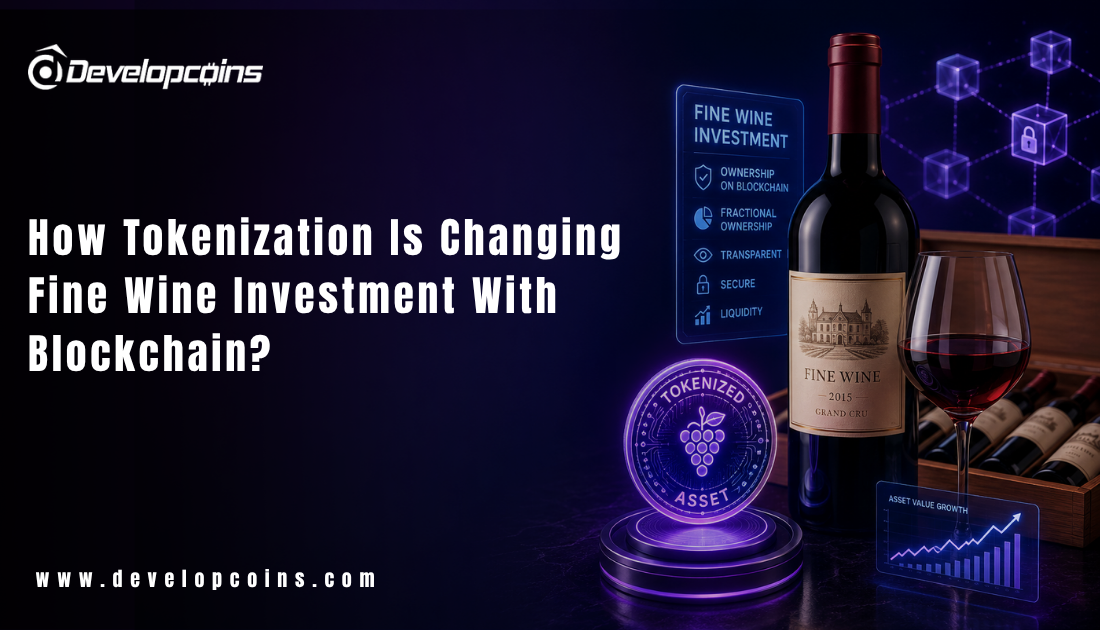
Fine wine has long been a valuable alternative asset, but buying and selling rare bottles often means high costs, expert knowledge, secure storage, and limited access. Blockchain is changing that model through tokenization, where physical wine can be represented by digital tokens. This gives investors a simpler way to access fractional ownership while bringing fine wine into the growing real-world asset (RWA) market.
What is Fine Wine Tokenization?
Fine wine tokenization represents ownership or an investment interest in physical wine through blockchain-based tokens. For instance, a $500,000 wine collection can be divided into digital tokens, allowing investors to purchase a smaller share instead of the entire collection.
This approach is part of RWA tokenization development, where physical assets are represented digitally on a blockchain. The model connects the physical wine with digital ownership while recording transactions and ownership changes on-chain.
The process typically follows:
- Physical wine
- Authentication
- Valuation
- Secure custody
- Token issuance
- Investor ownership
- Transfer or trading
How a Tokenized Wine Investment Platform Works
A tokenized wine platform connects the physical asset with investors, blockchain infrastructure, and trading functions.
1. Wine authentication
The platform verifies details such as the producer, vintage, condition, provenance, and storage history before the wine is represented digitally.
2. Storage and valuation
The physical wine remains with a professional custodian. Storage, insurance, inventory, and valuation records support the asset behind the token.
3. Token issuance
Once the asset and ownership structure are established, smart contracts can issue the required tokens and record their ownership on the blockchain.
4. Investor management
Investors can access their accounts, complete identity checks, view available assets, purchase tokens, and manage their holdings through the platform.
5. Trading and redemption
Depending on the business model, investors may transfer or trade their tokenized interests through a marketplace. Redemption terms can also be built around the underlying wine.
Why Investors Are Interested in Tokenized Wine
Tokenization changes how investors can participate in fine wine ownership.
Lower entry barriers - Fractional ownership can reduce the capital required to gain exposure to valuable wine collections.
Clearer ownership records - Blockchain provides a transaction history that can make digital ownership easier to track.
Simpler transfers - A digital marketplace can offer another way to transfer eligible investment interests.
Wider investor reach - Tokenized assets can be presented to a broader digital audience, subject to regulations and investor eligibility.
However, tokenization does not automatically make wine investments liquid or risk-free. Demand, regulations, custody, asset valuation, and marketplace activity still influence the investment.
What a Wine Tokenization Platform Needs
A successful platform needs more than a token. It has to connect the physical wine, blockchain, investors, and compliance processes.
The setup varies by model, whether it represents individual bottles, collections, or wine funds. An Blockchain development forms the technical foundation, connecting token ownership with the wider investment system.
Key components include:
- Asset verification and registration
- Token issuance and smart contracts
- Investor accounts, wallets, and portfolios
- Wine custody and inventory tracking
- Token marketplace and payments
- KYC/AML and reporting tools
- Ownership, redemption, and settlement management
Choosing a Tokenization Model for Fine Wine
The right model depends on ownership rights, investor structure, custody, liquidity, jurisdiction, and regulatory requirements. Different wine businesses can use different token structures.
Fractional ownership
A collection is divided into smaller investment interests. This can make high-value assets accessible to investors with lower budgets.
Single-asset tokenization
A specific bottle, case, or collection receives a digital representation. This Asset-backed token development model can work well when individual asset provenance is important.
Wine fund or index model
Multiple wine assets are grouped into a portfolio, giving investors exposure to several assets instead of one bottle or collection.
Technology Used in Tokenized Wine
Blockchain records digital ownership and transactions, while supporting technologies manage the platform. Physical verification and secure custody remain essential to confirm the wine exists and is properly stored.
Blockchain network - Records token ownership and transactions.
Smart contracts - Manage token issuance, transfers, and predefined rules.
Token standards - Provide a technical structure for representing digital assets.
Digital wallets - An crypto wallet integration allows investors to hold and manage tokens.
Marketplace - Provides a place for eligible purchases and secondary transactions.
Payment systems - Connect the investment platform with supported fiat or cryptocurrency payments.
Asset tracking - Connects blockchain records with authentication, inventory, storage, valuation, and custody information.
Keeping the Wine and Token Connected
The physical wine and its digital token must remain accurately linked. Verification, custody, and updated records help maintain the token’s value when the wine is moved, sold, redeemed, or revalued.
A platform may maintain information such as:
- Wine identity and vintage
- Provenance and authentication
- Storage and custodian details
- Insurance
- Valuation
- Ownership structure
- Redemption conditions
Regulatory and Business Considerations
Tokenized wine combines physical assets, digital assets, and investment activity, so regulatory planning is important. Businesses need clarity around asset ownership, investor rights, securities regulations, KYC/AML, custody, insurance, and jurisdiction.
The legal treatment can vary depending on what the token represents and where the platform operates. Investor rights around transfers, distributions, and redemption should also be clearly defined.
These requirements can affect the token structure, onboarding process, transaction rules, custody model, and technology architecture.
What It Takes to Launch a Tokenized Wine Platform
The business first determines what is being tokenized, what each token represents, how the wine will be stored, and what rights investors receive.
The development process can then cover:
Asset model - Define the wine, ownership structure, valuation, custody, and investor rights.
Blockchain - Select a suitable network and token standard based on platform requirements.
Smart contracts - An smart contract development creates the rules for token issuance, transfers, and restrictions.
Investor platform - Build onboarding, wallets, portfolios, asset listings, and transaction history.
Marketplace - Add purchasing, eligible transfers, pricing, and settlement functions.
Compliance and custody - Connect KYC/AML, asset verification, insurance, and physical storage records.
Testing - Test smart contracts, security, transactions, investor flows, and asset records before launch.
Turn Fine Wine Into a Blockchain-Based Investment Opportunity
Fine wine already has scarcity, provenance, and collectability. Tokenization adds a digital ownership layer that can change how investors access and manage these assets. It connects physical assets, verified ownership, investors, blockchain infrastructure, custody, compliance, and trading within one platform.
For businesses exploring this model, the right starting point is defining the asset structure, investor model, regulatory requirements, and technology needs. Developcoins, a Token development company, helps businesses turn these requirements into functional solutions with token development, blockchain development, smart contract development, crypto wallet development, and tokenization platform development services.
A clear asset model combined with the right technology can turn fine wine into a practical blockchain-based investment opportunity.

THE AUTHOR
DEVELOPCOINS EDITORIAL TEAM
Our Developcoins' Editorial Team brings over 10+ years of experience in blockchain, fintech, and AI-based technologies. We are a team of developers, analysts, and technical writers sharing insights from successful projects. We believe content should do more than inform. It should guide, clarify, and give readers the confidence to explore new technologies. To support this, we publish content backed by practical knowledge gained from working on live projects across industries.
 Blockchain in E-commerce - How It’s Changing Payments, Trust, & Supply Chains