

How Much Does It Cost to Develop a Crypto Wallet App for Your Business?
Discover the complete cost of crypto wallet app development, from basic to advanced wallet solutions. Learn about features, development timelines, pricing factors, and how businesses can build secure crypto wallet apps with the right development approach.
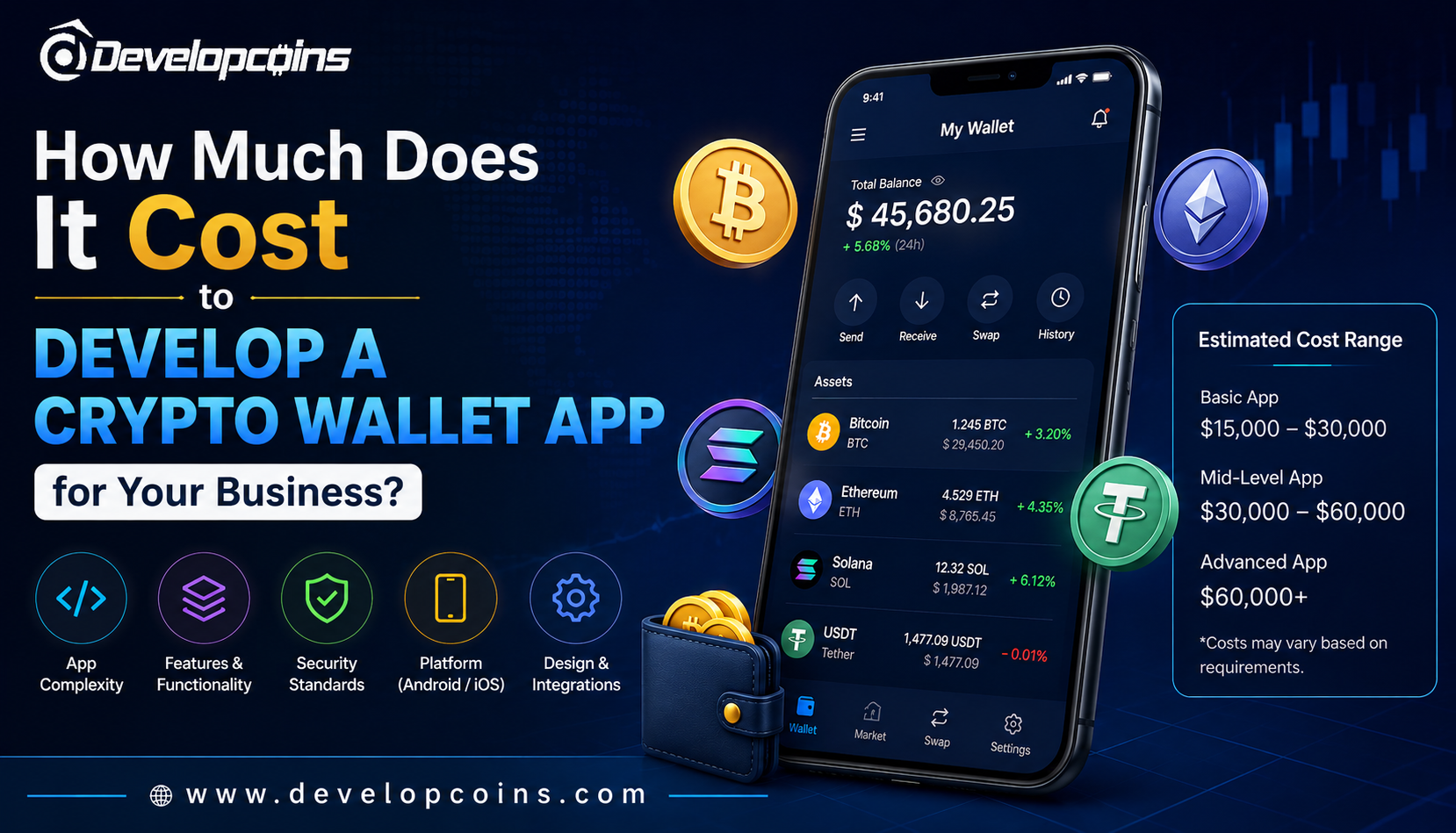
Crypto wallet apps have become very popular in the blockchain world. They offer an easy way for everyone to store, send, receive, and handle their crypto assets by using mobile or online apps. These crypto wallet apps can be beneficial for startups, fintech companies, exchanges, and other blockchain projects as they can act as a tool not only to attract and retain customers but also to facilitate cryptocurrency transactions.
Crypto Wallet App Overview
A crypto wallet app is a software program that helps individuals keep and handle the cryptocurrencies and other blockchain-based assets. It gives the access of the assets to the users through public and private keys. These keys are required for approving transactions and managing the funds on the blockchain.
Why Businesses Build Crypto Wallet Apps
Businesses develop crypto wallet development apps as a method of giving their users direct access to digital assets. These wallets can easily be integrated with different services like exchange platforms, payment services, NFT marketplaces, gaming ecosystems, and decentralized finance applications. In fact, for most blockchain enterprises, the wallet app turns out to be the key product that consistently keeps their users linked with the platform.
Main Purpose of a Crypto Wallet App
The main role of a crypto wallet app is to provide a secure and convenient way for users to handle digital assets. Through a wallet app, users can:
-
Send and receive cryptocurrencies
-
View wallet balances in real time
-
Access transaction history
-
Store private keys or recovery phrases
-
Connect with blockchain-based services
Key Features of a Crypto Wallet App
User Registration and Wallet Setup
Most wallet apps start with creating an account and generating a wallet; this can even go as far as registration verification, password creation, and recovery setups.
Send and Receive Cryptocurrency
Through the app, users must be capable of transferring crypto to another wallet address, securely receiving money, and even using QR codes for their transactions.
Real-Time Balance and Transaction History
A wallet app must indicate the present balances and also offer a history of transactions made. This allows users to track their withdrawals, and transfer activities easily.
Multi-Currency Support
Companies aiming for a larger market presence often make wallet apps that supports different cryptocurrencies such Bitcoin, Ethereum, stablecoins, and various altcoins.
Security Features
Security functionalities are important in crypto wallet development. Such features may include PIN and biometric login 2FA encrypted keys, and multi-signature.
Advanced Wallet Features
As the business strategy, wallet apps may feature token swapping staking NFTs, dApps browser, fiat on-ramp integration, and push notifications.
Factors That Influence Crypto Wallet App Development Cost
The cost of building a crypto wallet app is not based on one fixed number. It depends on a combination of technical, design, and business-related factors.
Wallet Type and Architecture
The type and structure of the wallet influence the security strategies, backend programming, and regulatory procedures.
Number of Supported Cryptocurrencies
It takes less effort to develop a wallet app that supports only one blockchain network than a multiple cryptocurrencies supporting wallet across several networks.
Platform Choice
Building a wallet app for Android alone costs less than developing for Android, iOS, and the web whether the business wants a single-platform app or a broader multi-platform.
Security Requirements
Security has a major impact on development cost. Features such as private key encryption, recovery options, biometric access, and fraud monitoring require efforts.
UI/UX Design Complexity
A more polished design with custom user journeys such as clear navigation, simple transaction flows, and an interface can add to the overall project cost.
Third-Party Integrations
Many crypto wallet apps depend on services such as APIs, payment gateways, KYC providers, token swap tools, analytics dashboards, and push notifications.
Crypto Wallet App Development Cost Breakdown
The cost of crypto wallet app development can vary because of design, development, blockchain integration, testing, and post-launch maintenance.
Basic Wallet App Cost
A simple crypto wallet app with core features such as wallet creation, send and receive functions, transaction history, and QR support may cost around $25,000 to $45,000. This is often suitable for startups building an MVP or testing a new product concept.
Mid-Level Wallet App Cost
A mid-range wallet with multi-currency support, biometric login, push notifications, stronger UI design, and better account management may cost between $50,000 and $85,000.
Advanced Wallet App Cost
An advanced crypto wallet app with DeFi integrations, NFT support, staking, fiat payment options, admin dashboards, and enterprise-grade security may cost $90,000 to $150,000 or more depending on the final requirements.
Additional Budget Areas
Apart from core development, businesses should also plan for UI/UX design, quality testing, blockchain API usage, deployment, cloud hosting, and future app updates.
How Long Does It Take to Build a Crypto Wallet App?
The time needed to build a crypto wallet app depends on its complexity, number of features, supported blockchain networks, and testing requirements.
Timeline for a Basic Wallet App
A basic wallet app with essential features can usually be developed in 2 to 4 months.
Timeline for a Mid-Level Wallet App
A mid-level wallet with stronger design, added security, and multi-currency support may take 4 to 6 months.
Timeline for an Advanced Wallet App
A feature-rich wallet with DeFi tools, NFT storage, staking, and complex security systems may require 6 to 10 months or more.
How to Reduce Crypto Wallet Development Costs
Reducing crypto wallet development costs is possible when businesses plan their product carefully and build in stages instead of trying to launch every feature at once.
Start With an MVP
An MVP wallet includes only the most important features needed for launch. This approach helps businesses enter the market faster and collect user feedback before expanding the app.
Prioritize Core Features
Instead of building every possible wallet function, businesses can begin with wallet creation, send and receive support, balance tracking, and transaction history.
Use Proven Development Tools
Using trusted blockchain libraries, SDKs, and existing integrations can reduce development time compared to building every component from the ground up.
Choose the Right Development Company
An experienced crypto wallet development company can help avoid common technical mistakes, manage security planning more effectively, and guide the project properly.
Why Businesses Are Investing in Crypto Wallet Apps
At last, the cost to create a crypto wallet app changes according to wallet type, feature complexity, choice of blockchain, security features, and platform selection. For companies who are considering to launch a wallet in the crypto industry, knowing these cost factors can help them prepare better and budget more efficiently for the development process.
Mostly if you're working with a professional Crypto wallet development company like Developcoins means you are getting assistance to create the basic wallet, create advanced wallet featuring DeFi tools, NFT integration, and high level security despite your budget. With the right strategy, a clear feature roadmap, and the right development support, businesses can build a wallet app that delivers long-term value and strengthens their presence in the digital asset space.

THE AUTHOR
DEVELOPCOINS EDITORIAL TEAM
Our Developcoins' Editorial Team brings over 10+ years of experience in blockchain, fintech, and AI-based technologies. We are a team of developers, analysts, and technical writers sharing insights from successful projects. We believe content should do more than inform. It should guide, clarify, and give readers the confidence to explore new technologies. To support this, we publish content backed by practical knowledge gained from working on live projects across industries.