

Blockchain for IoT - Why Blockchain Is the Missing Layer in IoT Security?
This blog explains how blockchain works in IoT, its key benefits, real-world use cases, and why businesses are adopting blockchain IoT solutions to build safer, scalable, and transparent connected systems.
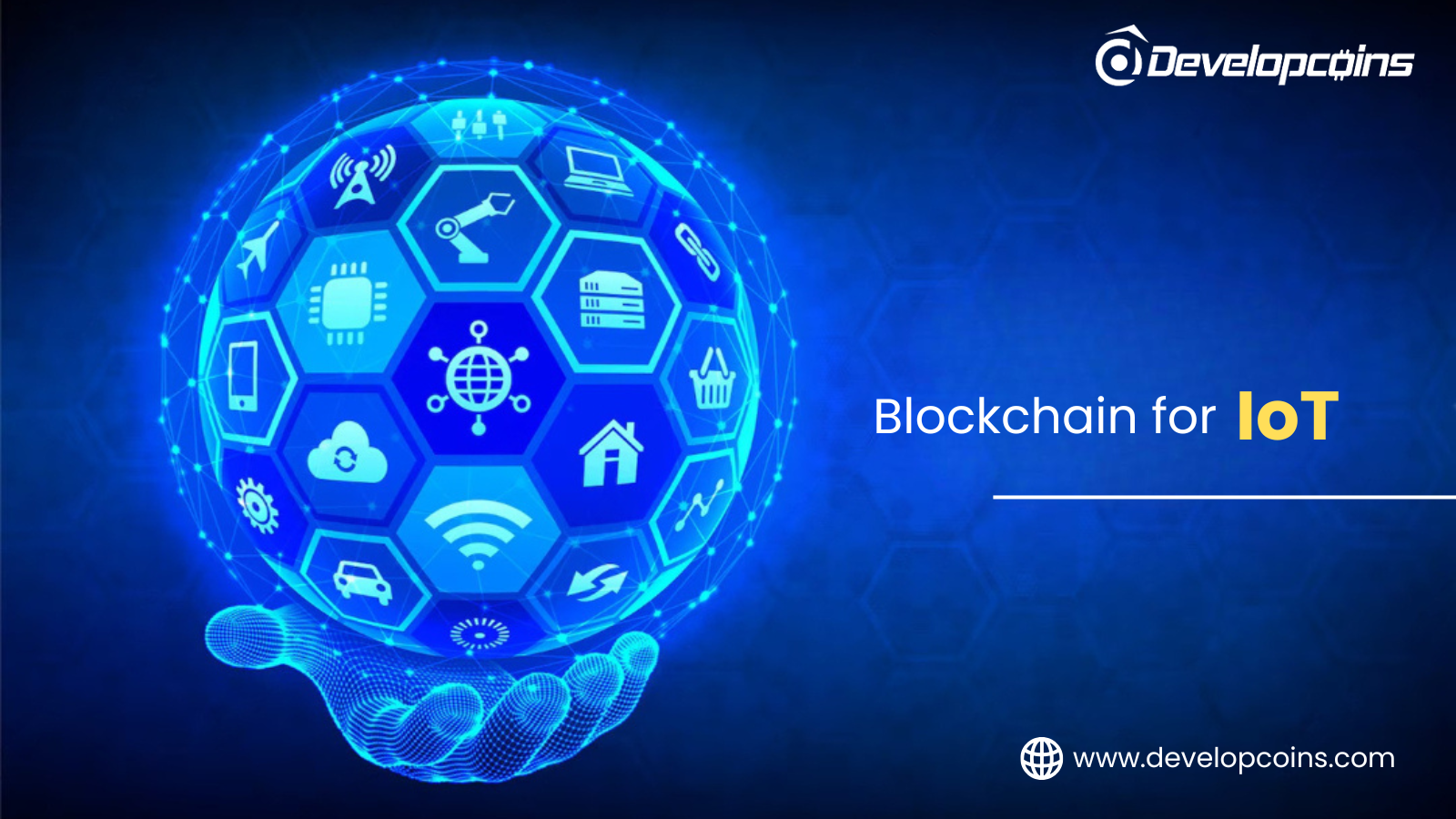
Internet of Things (IoT) is changing the way devices, machines, and systems talk to each other. From smart homes and connected cars to industrial automation and healthcare monitoring, IoT is now part of everyday life. But as these networks grow larger, they also face serious issues, like security risks, lack of trust, data tampering, and too much dependence on centralized systems.
That’s where blockchain in IoT comes in. By combining decentralized ledger technology with connected devices, blockchain helps IoT ecosystems become more secure, transparent, and capable of operating autonomously, without depending on a single controlling authority.
What Is Blockchain in IoT?
Blockchain in IoT refers to combining distributed ledger technology (DLT) with IoT devices so they can record, verify, and automate interactions in a secure way. Instead of depending on one central server, devices operate in a decentralized setup, where trust is built into the network itself.
Every time an IoT device shares data or performs an action, that information is recorded on the blockchain as a permanent entry. Once it’s validated, it can’t be changed or tampered with.
Why Blockchain Is Important for IoT?
Traditional IoT architectures are usually centralized, which makes them exposed to cyberattacks, system failures, and data breaches. Blockchain IoT development helps solve these issues by adding decentralization and strong cryptographic security to the mix.
1. Decentralization
With blockchain, there’s no single point of failure. Data is distributed across multiple nodes, so even if one node goes down or is compromised, the rest of the network continues to function smoothly.
2. Improved Security
Blockchain protects data shared between IoT devices using advanced cryptographic methods. It also access to secure device authentication, preventing unauthorized access and reducing the risk of hacking or spoofing.
3. Data Integrity
Once IoT data is recorded on the blockchain, it can’t be changed or deleted. This makes sure data accuracy and protects it from tampering, an important requirement for industries like healthcare, finance, and manufacturing.
4. Transparency & Traceability
Blockchain creates a clear and complete record of every device action. Since all activities are traceable, it becomes easier to build trust, assure accountability, and audit operations when needed.
5. Automation with Smart Contracts
Smart contracts allow IoT devices to act on their own based on predefined rules. They can automatically trigger alerts, process payments, or grant access without the need for manual intervention, making IoT systems faster and more efficient.
How Blockchain Works in IoT?
The integration of blockchain IoT solutions follows a structured workflow:
Data Collection
IoT devices such as sensors, wearables, or machines collect real-time data.
Data Encryption
The collected data is encrypted to assure confidentiality and security.
Blockchain Transaction
Encrypted data is sent to the blockchain as a transaction.
Network Validation
Blockchain nodes validate the transaction using consensus mechanisms.
Smart Contract Execution
Smart contracts automatically trigger actions like alerts, access permissions, or payments.
Immutable Storage
Verified data is permanently stored on the blockchain for analytics, auditing, and reporting.
Key Use Cases of Blockchain in IoT
Smart Homes
Blockchain makes smart homes more secure by accessing decentralized device authentication and access control. Homeowners can easily manage who or what can access their devices, while smart contract development automatically handles tasks like energy usage optimization, billing, and coordinating connected appliances.
Industrial IoT (IIoT)
In industrial settings, blockchain supports secure machine-to-machine communication and keeps maintenance records transparent and tamper-proof. It also accesses real-time supply chain tracking, helping businesses improve efficiency, reduce downtime, and make better operational decisions.
Smart Transportation
Blockchain helps secure vehicle identities and protect sensitive driving data. It also supports automated toll payments, usage-based insurance models, and trusted data sharing for vehicles, traffic systems, and infrastructure.
Smart Agriculture
With blockchain IoT development, farmers can monitor crops through sensors, track food quality with full transparency, and automate irrigation or resource payments based on real-time field data.
Healthcare IoT
In healthcare, blockchain assures medical device data is secure and tamper-proof while giving patients greater control over their data. It also supports real-time health monitoring, all while maintaining privacy, compliance, and data integrity.
Benefits of Blockchain in IoT
-
Secure Device Identity - Cryptographic identities prevent unauthorized device access.
-
Lower Costs - Reduced reliance on centralized infrastructure and manual processes.
-
Trusted Device Interactions - Decentralized validation allows secure machine-to-machine communication.
-
Secure Data Sharing - Controlled, transparent data exchange among stakeholders.
-
Scalable & Resilient Systems - No single point of failure, assuring reliability at scale.
Why Choose Developcoins for Blockchain in IoT?
Combining blockchain with IoT is changing the way businesses use technology to operate, secure data, and automate processes. From supply chain tracking and asset management to healthcare, manufacturing, and energy systems, this integration opens up new possibilities for smarter and more efficient operations, all while helping businesses stay competitive.
That’s where Developcoins comes in. As a leading blockchain development company, with hands-on experience in blockchain development, IoT integration, and smart contracts. Developcoins helps businesses turn these emerging technologies into practical, real-world solutions. Whether it’s building lightweight blockchain frameworks for IoT devices or creating secure, automated IoT ecosystems, Developcoins focuses on simplifying processes, improving transparency, and strengthening security, so your business can confidently move forward in an increasingly connected and decentralized world.

THE AUTHOR
DEVELOPCOINS EDITORIAL TEAM
Our Developcoins' Editorial Team brings over 10+ years of experience in blockchain, fintech, and AI-based technologies. We are a team of developers, analysts, and technical writers sharing insights from successful projects. We believe content should do more than inform. It should guide, clarify, and give readers the confidence to explore new technologies. To support this, we publish content backed by practical knowledge gained from working on live projects across industries.
 ZK Rollup Scaling Solutions