


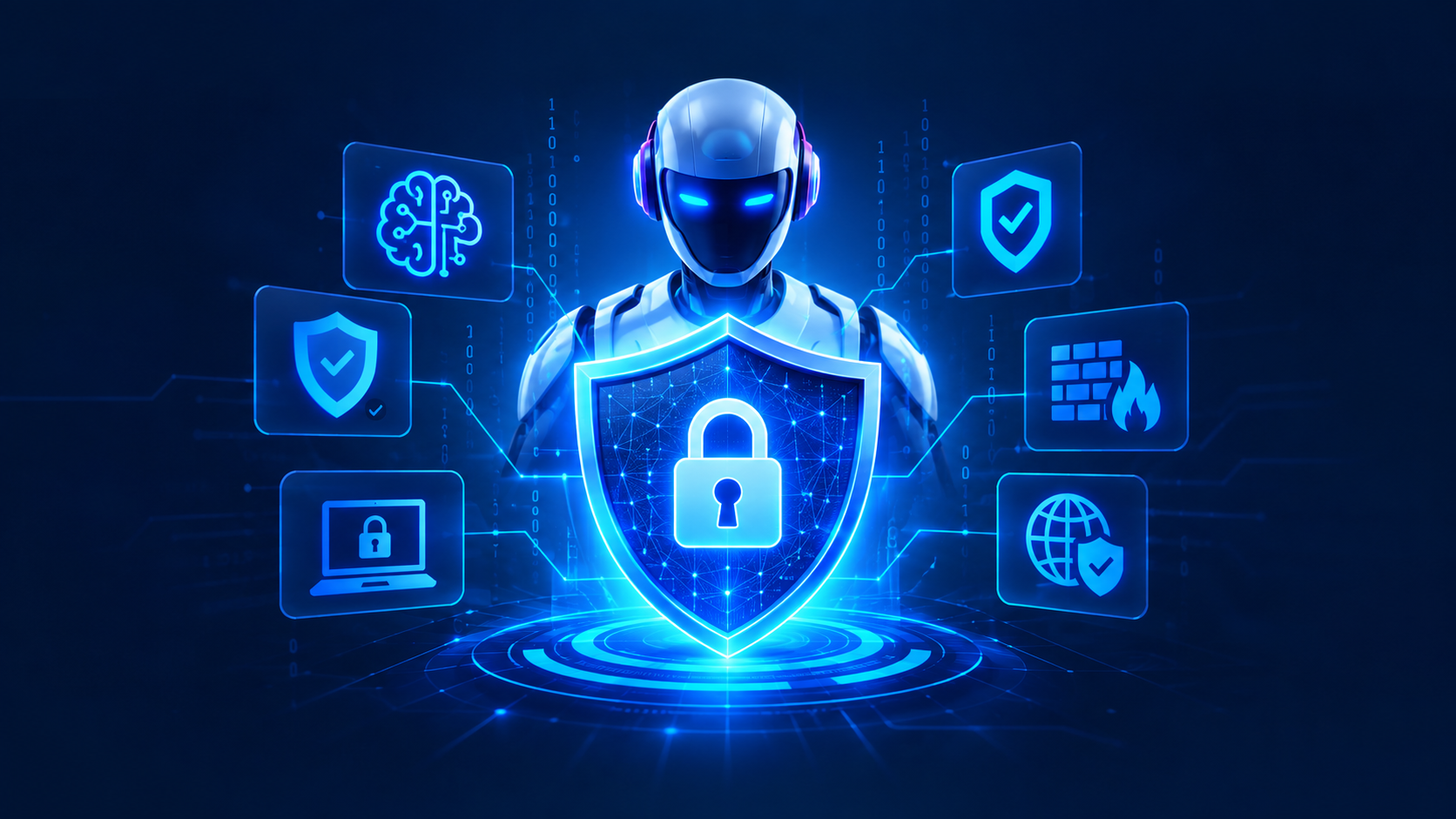
Artificial intelligence is helping businesses strengthen cybersecurity by identifying suspicious activities, analyzing potential threats, and improving security monitoring. AI-powered cybersecurity software can support threat detection, malware analysis, fraud prevention, and vulnerability assessment, helping businesses make informed security decisions.
Developcoins provides AI development services for businesses exploring AI-powered software solutions for cybersecurity. From custom AI cybersecurity software development to integrating AI capabilities into existing systems, businesses can explore solutions aligned with their security requirements, operational workflows, and technology infrastructure.
How AI Is Used in Cybersecurity Software
AI-powered cybersecurity software analyzes data from networks, applications, user activities, and security logs to identify unusual behavior. Machine learning models can help recognize patterns associated with potential attacks, while natural language processing can support the analysis of suspicious emails and phishing content. These capabilities can help security teams investigate potential threats and prioritize security events.
AI can also support automated security monitoring by analyzing incoming alerts, identifying anomalies, and recommending appropriate responses based on configured rules. However, AI-generated findings require validation, and effective cybersecurity depends on reliable data, suitable security controls, and human oversight.
AI Cybersecurity Software Development Services by Developcoins
Developcoins provides AI development services for businesses exploring intelligent software solutions for cybersecurity. AI capabilities can support security analysis, threat identification, risk assessment, and monitoring workflows, helping businesses address security requirements through software development.
1. Custom AI Cybersecurity Software Development
Develop custom AI cybersecurity software through custom AI software development to match your business operations, security requirements, and existing infrastructure. Integrate AI-driven analytics and anomaly detection to identify potential risks and support informed security decisions.
2. AI-Powered Vulnerability Assessment Software
Build AI-powered software to analyze security findings, application configurations, and software dependencies. Help technical teams identify potential weaknesses, prioritize remediation, and support ongoing vulnerability management.
3. AI-Based Endpoint Threat Detection Software
Develop AI-enabled software to analyze endpoint activity and identify suspicious behavior across business devices. Support security teams in investigating potential threats and improving visibility into endpoint-related risks.
4. AI Cybersecurity Risk Assessment Software
Use AI-driven data analysis to evaluate security findings, identify risk patterns, and support risk prioritization. Help businesses make informed decisions about security improvements and resource allocation.
5. AI Intrusion Detection Software Development
Develop AI-based intrusion detection software that analyzes network traffic and system activity for unusual patterns. Help businesses flag potential unauthorized access and support faster security investigations.
6. AI Security Monitoring Software Development
Build AI security monitoring software to analyze logs, organize alerts, and highlight activities that require attention. Improve security visibility and help teams manage monitoring workflows more efficiently.
7. AI Application Security Software Development
Integrate AI capabilities into application security workflows to support code analysis, vulnerability identification, and security issue prioritization. Help development teams identify potential weaknesses during software development and maintenance.
8. AI Threat Detection and Response Software
Develop AI-enabled software to analyze threat signals, correlate security alerts, and support incident investigation. Help businesses prioritize potential incidents and streamline response workflows with appropriate human oversight.
9. AI-Powered Cloud Security Software
Build AI-enabled software to analyze cloud activity, configuration changes, and access patterns for potential security risks. Support cloud security monitoring and help businesses identify issues that require further investigation.
10. AI Data Protection and Privacy Software
Develop AI-enabled data analysis solutions to identify unusual access patterns and support sensitive data monitoring. Help businesses strengthen data visibility while considering privacy requirements, access controls, and secure data handling.
11. AI Cybersecurity Advisory and Analytics Software
Build AI-powered analytics software that organizes security findings and presents actionable insights for business decision-makers. Support security planning, risk evaluation, and informed decisions about cybersecurity priorities.
12. AI Digital Identity and Access Monitoring Software
Develop AI-enabled software to analyze login activity, access patterns, and unusual account behavior. Help businesses identify potential identity-related risks and strengthen access monitoring across their systems.
Key AI Cybersecurity Software Use Cases for Businesses
AI cybersecurity software helps businesses protect digital assets, reduce security risks, and improve operational visibility. Companies can use these solutions to strengthen threat detection, prevent fraud, and support security decision-making.
1. AI-Powered Threat Detection and Prevention Software
Businesses can use AI to monitor network traffic and application activity for suspicious behavior. This helps security teams identify potential threats earlier, prioritize investigations, and reduce the risk of operational disruption.
2. AI-Based Malware and Phishing Detection Software
AI-based software helps businesses identify suspicious emails, malicious links, and potentially harmful files. This can reduce exposure to phishing attacks, protect sensitive business information, and support safer employee workflows.
3. Fraud Detection and Anomaly Analysis Software
Businesses in fintech, e-commerce, and digital services can use AI to analyze transactions and user behavior for unusual patterns. This helps teams flag potentially fraudulent activities, investigate risks, and make better-informed decisions.
4. Automated Security Monitoring Software
AI-powered security monitoring software analyzes system logs and security alerts to highlight activities that need attention. This helps businesses reduce repetitive manual reviews, streamline incident investigation, and use security resources more efficiently.
5. AI-Driven Vulnerability Assessment Software
Businesses can use AI to analyze security findings, software dependencies, and system configurations to identify potential weaknesses. This helps technical teams prioritize remediation efforts, manage security risks, and plan software maintenance more effectively.
Benefits of AI Cybersecurity Software Development for Businesses
AI cybersecurity software development can help businesses analyze large volumes of security data, identify unusual activity, and prioritize potential threats for investigation. Automated analysis may reduce repetitive manual work and help security teams focus on higher-priority incidents. AI-powered fraud detection can also support risk assessment by identifying activity that differs from expected patterns.
Custom AI cybersecurity software can be designed around an organization's existing infrastructure, data sources, and operational requirements. With suitable integration, monitoring, testing, and human oversight, businesses can use AI to support security decision-making and improve visibility across their systems. Actual results depend on implementation quality, model performance, data availability, and the security controls surrounding the solution.
Technologies Used in AI Cybersecurity Software Development
AI cybersecurity software development can involve machine learning frameworks, data processing tools, programming languages, APIs, databases, and cloud infrastructure. Python is commonly used for data analysis and machine learning, while frameworks such as PyTorch and TensorFlow support the development and evaluation of AI models. Natural language processing tools may be used to analyze suspicious email content, security reports, and other text-based data.
Backend technologies, databases, and APIs help connect AI capabilities with applications and security data sources. Cloud platforms can support deployment, monitoring, and scalable processing, subject to appropriate security configurations. The technology stack should be selected according to the project requirements, data sensitivity, integration needs, performance expectations, and maintenance considerations rather than relying on a fixed set of tools for every solution.
Challenges in AI Cybersecurity Software Development
Developing AI-powered cybersecurity software involves challenges related to data quality, model accuracy, privacy, integration, and changing attack techniques. Incomplete or unrepresentative training data can affect detection performance, while false positives may create additional work for security teams. Attackers may also adapt their techniques to evade detection, making continuous evaluation and model updates important.
Businesses must also consider secure data handling, access controls, regulatory obligations, and the risks associated with automated decisions. Integrating AI into existing security infrastructure can require additional testing and compatibility checks. Addressing these challenges through suitable data governance, model evaluation, human oversight, and ongoing monitoring helps establish a more reliable foundation for AI cybersecurity software.
Why Choose Developcoins for AI Cybersecurity Software Development?
Developcoins provides AI development services for businesses planning to incorporate artificial intelligence into their software products and operational workflows. For cybersecurity-related projects, the development process begins with understanding the intended use case, available data, existing systems, and business objectives to identify suitable AI capabilities.
From custom software development to AI integration, the approach should reflect the project's technical requirements, data protection needs, and long-term maintenance plans. Businesses exploring AI cybersecurity software development can discuss their requirements with Developcoins to evaluate potential solution approaches, integration considerations, and development priorities.
Explore AI Development Services with Developcoins
Planning an AI-powered cybersecurity software solution? Discuss your project requirements with Developcoins to explore suitable AI capabilities, software architecture, and integration options for your business.
Strengthen your digital security with intelligent, AI-powered cybersecurity solutions tailored to your business requirements. Contact Developcoins today to explore customized cybersecurity software development and protect your digital infrastructure with advanced AI technology.